Overview
Everyone has, at some point, wondered why they were born here rather than somewhere else, only to quickly dismiss the thought.
For me, the question has become an obsession.
It goes back to my grandmother's story. In 1938, she was forced to flee Franco's regime in Spain. Along with her two brothers, she was evacuated and placed in foster care across Europe. While her brothers were sent to refugee centres in the Soviet Union, she was taken in by a wealthy family of Flemish industrialists. They never saw one another again.
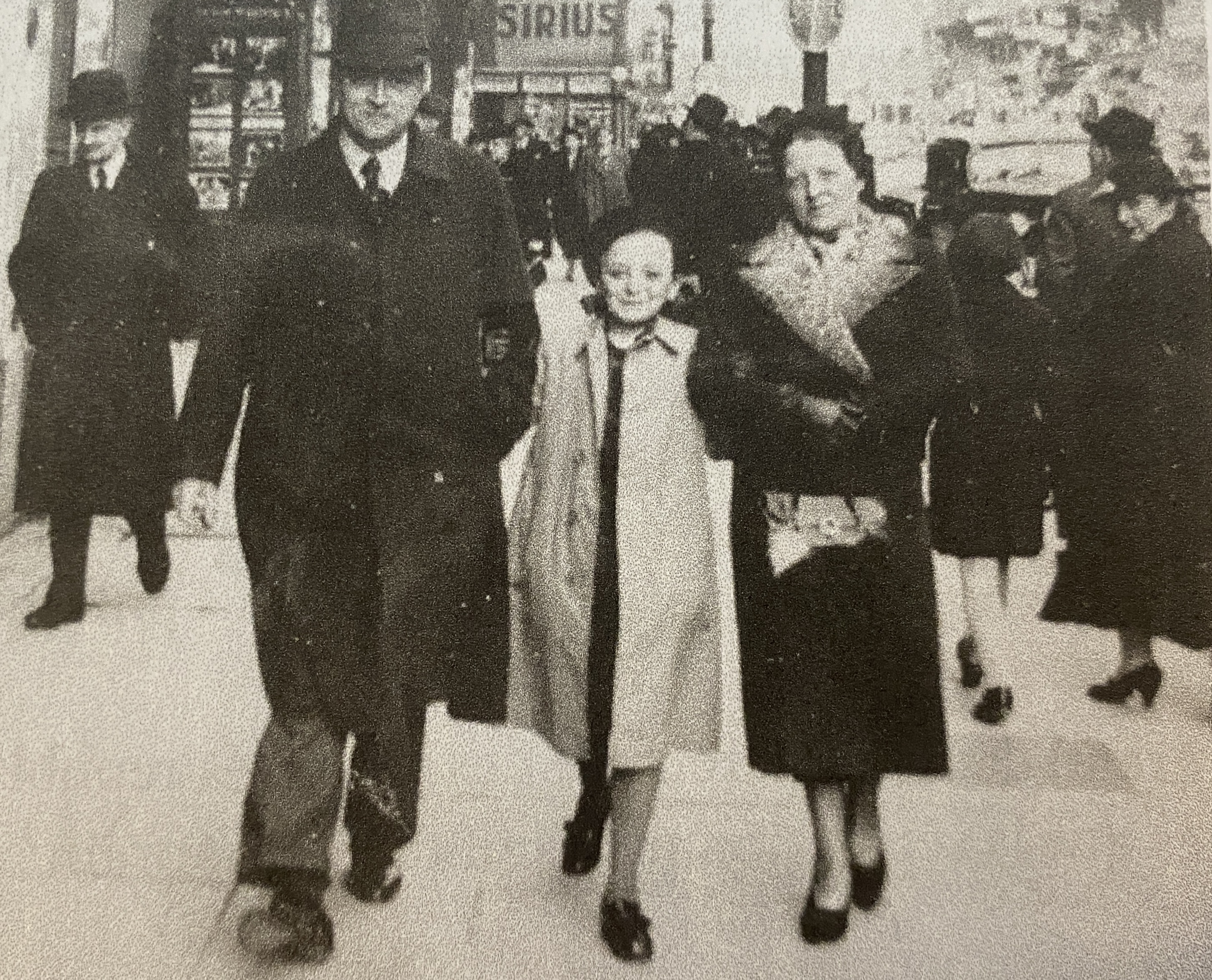
(Frans van den Eynden & Purification & Maria Tessens)
Three children, three radically different destinies, separated by a single variable: chance. My grandmother experienced an extraordinary rise in social status, while her brothers remained in the circumstances into which they had been born.
My grandmother experienced a remarkable rise in social status, while her brothers remained in the circumstances they had started out in. Yet her fate could just as easily have been theirs.
This twist of fate continues to make me question my own path. Would I ever have considered becoming an artist if I had been born into a working-class family? In France, 30% of visual artists have fathers in senior managerial positions, compared with just 11% of the working population as a whole.
The further I go, the more I realise how much my inherited privileges have given me the freedom to make choices, to take risks, but also, as Nathalie Achard so eloquently puts it, “to have the mental space and the means to imagine beyond my own existence, beyond the concerns of my everyday life.”
Decades later, my relationship with my Belgian-Iranian partner brought this deeply personal question back to the surface. Through his everyday experiences, I began to understand how the lottery of birth had spared me countless invisible barriers, being addressed disrespectfully by the police, being refused a flat to rent.
Before meeting him, I had never had to give these things a second thought. What I had always taken for granted, my skin colour, my appearance, my voice, my health, my sexuality, had been quietly working in my favour. Things I had assumed were neutral were, in fact, a constellation of subtle privileges. They were neither conspicuous nor consciously claimed, yet they shaped my life. They smoothed my path, opened doors and granted me the benefit of the doubt. A diffuse, constant form of protection I had never recognised as such. What I had long been able to ignore, he had never been allowed to forget.
This is how Les Privilèges Invisibles (Invisible Privileges) came into being: an introspective artistic investigation involving 250 people from my own social circle. Rooted in personal experience, the project seeks to illuminate the social mechanisms that shape all our lives. It is not intended to denounce, but to make perceptible the unearned advantages that pass quietly from one person or generation to another: the subtle workings of social exclusivity, the privileges so commonplace they go unquestioned, the life trajectories celebrated as achievements while resting on foundations that remain unseen.
I do not seek to speak on behalf of those who experience the most overt forms of discrimination. My perspective is different: to explore that grey area in which we consider ourselves "normal", without recognising that this very normality is already a luxury. The power of privilege lies in its discretion. It does not obstruct or hold us back. It simply allows us to move through life more easily. And that is precisely what makes it so powerful, and so difficult to question.
Even those who consider themselves progressive, and who are aware of their advantages, may remain blind to the full complexity of their privileges. We think we understand, yet rarely grasp their consequences. We believe ourselves perceptive, yet it is almost impossible to recognise advantages absorbed since childhood, which precede our own actions and shape the way we experience the world.
Les Privilèges Invisibles seeks to shed light on this opacity of the "normal", examining how invisible privileges, relating to health, beauty, age, gender, social class, sexual orientation and race, quietly influence the course of our lives. Through a spectrum of 250 wet-plate collodion portraits on glass, the project brings together artistic observation and empirical research to reveal what ordinarily escapes our attention: the invisible structures of everyday privilege.
ARTIST'S STATEMENT
To map, to classify, to catalogue. Not to fix things in place, but to make the unknown bearable.
There is something almost instinctive, something vital, in this gesture: creating categories so as not to lose myself, drawing structures to remain standing in the face of what slips away. I know the world is blurred, often absurd, and that balance is fragile. Classification helps me hold on. It allows me to interrupt that sense of vertigo. Every attempt to organise is a way of taming chaos, of slowing down what escapes me. Of giving shape, however temporary, to what unsettles me.
Taking the time to observe, sometimes for years, is already a refusal to draw conclusions too quickly. In a world that demands immediate opinions and clear-cut positions, I try to suspend judgement. To widen the frame. To examine the contours before venturing an interpretation. Because there is no immediate truth. Only layers, perspectives and silences that must be taken into account. What we see always depends on where we stand, and on how much time we are willing to devote to looking.
In Katalog, for which I photographed each of the 12,795 objects I own, those possessions became the fragments of an indirect self-portrait. In Les Privilèges Invisibles, it is human trajectories that I seek to explore, through a spectrum of data, stories and faces.
It is not so much a need to know as a need to feel: to feel where I stand, where I come from, what I have been given without ever noticing. Here, classification is not about establishing hierarchies, but about revealing. Giving form to the invisible. Creating a language where, so often, there is only silence.
How can we speak of the lottery of birth without slipping into abstraction? Why do some lives take flight while others stumble from the very beginning? Why such vast differences in what is possible? These questions have haunted me since childhood, but they became more pressing in adulthood, through the people I love who have not enjoyed the same unspoken rights and advantages.
This project does not seek to judge, but to make perceptible what so often escapes our awareness. It dwells on the subtle forces that shape the course of our lives, the quiet advantages that influence our paths. Through stories, faces and figures, I try to trace the invisible fabric that connects or divides us, that opens doors or places obstacles in our way, often without our even realising it.
PRIVILEGES: WHAT’S LEFT UNSPOKEN
Some privileges are obvious. They are reflected in bank accounts, in the neighbourhoods we grow up in... Others, more insidious, remain invisible to those who benefit from them.
Personally,
- I had never realised that, as a white woman, my chances of surviving breast cancer were significantly higher than those of a Black woman. A 40% higher risk of dying, simply because research, clinical trials and treatment protocols have historically been designed around white bodies.
- I had never realised that my "European" surname could place my CV much closer to the top of the pile, well ahead of someone whose name sounds foreign.
- I had never realised that, as a white person, I could easily find ballet pointe shoes, adhesive bandages or underwear in a shade labelled "nude", unlike people with darker skin tones.
- I had never realised that, as a heterosexual Belgian, I was 95% more likely to be able to adopt a child than a homosexual person.
- I had never realised that, as a woman, I faced a greater risk of serious injury in a car accident. Crash-test dummies are still largely modelled on male body proportions. And so on.
The myth of meritocracy
Our societies place effort on a pedestal.
We’re told, again and again, that “where there’s a will, there’s a way.”
Meritocracy is a comforting fiction. It suggests that everything depends on us: our choices, our effort, our willpower.
But the truth is, not everyone starts with the same chances.
For example:
- By the age of 3, a child from a professional background has heard, on average, twenty million more words than a child from a less privileged environment. Their vocabulary is 49% more diverse.
- A white man with a criminal record is more likely to be hired than a racialized man with a clean one.
- An employee considered “attractive” earns, on average, 15% more. In the U.S., prison sentences are 20% harsher for people perceived as “unattractive.”
- In France, a child is 83 times more likely to get into a top school if their father went there before.
etc.
Talent: A Product of Its EnvironmenT
The heart of the problem lies here: when we benefit from a privilege, we fail to see it. We assume that the rules are the same for everyone, that success depends solely on talent and hard work. Yet invisible privileges such as skin colour, appearance, personal connections and familiarity with social codes profoundly shape the course of our lives.
Even innate talent, which we so greatly admire, is largely shaped by our environment. As Samah Karaki, a neuroscientist and researcher, points out, we are not born with skills. We develop them through repeated exposure to stimulating environments.
Take Mozart, for example. His father had decided he would be a prodigy before he was even born. By the age of six, he had already accumulated 3,500 hours of practice. Can we really compare him to other children his age?
The same is true of almost every influential figure: the Williams sisters, Picasso, Bill Gates... All had access to exceptional resources from a very early age.
I came to understand the extent of my own privileges through my relationship with a Belgian-Iranian man. On paper, we share the same social status, the same network of connections and the same level of education. But out on the street, everything changes: police officers routinely addressing him with the informal tu, landlords refusing to rent him a flat...
Before this relationship, I had never realised that my privileges were inseparable from the discrimination experienced by others.
Indeed, privilege and injustice are two sides of the same coin:
- A home denied to a racialised person benefits a white person.
- A job made inaccessible to a disabled person goes to someone without a disability. And so on.
What now?
Feel guilty?
Stay silent?
Justify myself?
No.
I am not responsible for where I was born.
And to say that "life is unfair" misses the point, as the American philosopher John Rawls argued. Inequality is a fact of life. What is fair or unfair, however, is how society deals with these inequalities through its laws and institutions.
It is not about feeling ashamed, but about becoming aware.
Throughout my research, one thing became increasingly clear: the burden of educating others about injustice should not always fall on those who experience marginalisation. This project seeks to foster a sense of collective responsibility for the privileges that often remain invisible to those who benefit from them, and for the systemic inequalities they perpetuate.
It raises a few simple questions:
- Are we truly aware of our unearned advantages, those linked to appearance and age, gender, social class and education, sexuality, race and health?
- Do we realise how deeply our own privileges are intertwined with the discrimination experienced by others?
- Are we aware of the inequalities these privileges create, and would we be willing to change things?
- Why not rethink some of the social structures that perpetuate them?
With this in mind, I am embarking on a socio-artistic study involving 250 participants, exploring how privilege silently shapes the course of our lives.
Conclusion
Classifying people within my own social circle according to their degree of privilege might, at first glance, seem to reproduce the very logic of categorisation that has long been used to exclude and establish hierarchies.
Yet what I am proposing is fundamentally different. The aim is not to assign people fixed identities, but to reveal the silent structures of privilege, those that shape the course of our lives without us necessarily being aware of them.
Even though race, gender, and class are social constructs, simply ceasing to name them does nothing to erase the discrimination they produce. Affirming that we are all equal does not mean that we are all treated equally. And acknowledging these differences in treatment is not a rejection of the ideal of equality, but an attempt to make it a reality.
By choosing my own social circle as the subject of this investigation, I turn my gaze towards what is most familiar to me: those comfort zones where privilege becomes indistinguishable from normality, where what we have been given eventually comes to seem like something we have earned.
The intention is neither to judge, nor to induce guilt, nor to reduce individuals to a score. Les Privilèges Invisibles is, above all, a project intended to raise awareness, an attempt to make visible what our own position sometimes prevents us from seeing.
It seeks to make tangible the subtle head start that some people enjoy without even noticing it, to shift the focus, not only towards those whom society holds back, but also towards those it allows to move forward without encountering the same obstacles.
Les Privilèges Invisibles thus attempts to map what, precisely because it has always been part of our lives, eventually disappears from view.
And to leave each of us with a question: Which privileges have quietly carried me forward without my ever noticing them?